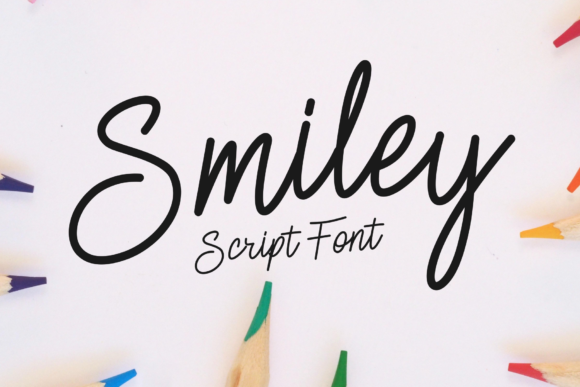
Smiley: A Bouncy Signature Font
There I was, staring at a blank brand board, trying to figure out how to make a new café’s identity feel warm and inviting. The client wanted something that felt personal, like the kind of place where you’d get a friendly nod from the barista. I reached for a few fonts, testing them on a logo concept, but nothing quite clicked. Then I tried Smiley.
The Personality of Smiley
Smiley is a clean and bouncy signature font that brings a sense of playfulness without being too whimsical. Its curves are soft, with just enough lift to give it a modern, handwritten feel. It doesn’t scream “handwritten” like some script fonts do, which makes it more versatile for different brand tones. Whether it’s used in a logo, a headline, or a tagline, Smiley adds a touch of personality that feels genuine.
What stands out about Smiley is its balance between elegance and approachability. It works well in both casual and semi-formal settings, making it a good choice for brands that want to feel friendly yet professional. The font has a light, airy weight that doesn’t overwhelm the page, which is great for headlines and display text.
Testing Smiley in Real Projects
I tested Smiley on a variety of design assets—logo drafts, brand boards, packaging mockups, business cards, website headers, and social media layouts. On a logo, it added a handcrafted feel that made the brand feel more authentic. When paired with a simple sans serif for body text, it created a nice contrast that kept the design from feeling too busy.
On a packaging mockup for a skincare product, Smiley worked well as a headline font, drawing attention without being distracting. It also looked great on a business card, where its legibility at smaller sizes was surprisingly good. For a website header, it brought a refreshing change from the usual bold sans serifs, giving the site a more personal touch.
In social media graphics, Smiley helped create a cohesive visual language that felt consistent across platforms. It was especially effective in Instagram posts and Facebook banners, where the font’s bounce gave a sense of energy and movement.
When to Use Smiley
Smiley shines as a display font, particularly for headlines, logos, and short phrases. It’s not ideal for long paragraphs or small text, as the delicate strokes can become less readable. That said, it’s perfect for projects that need a human touch—like a boutique identity, handmade shop branding, or a local restaurant logo system.
It’s best used as an accent or decorative font rather than a primary typeface. Pairing it with a serif or sans serif font helps keep the design balanced and avoids visual clutter. For example, using Smiley for a headline and a clean sans serif for body text creates a modern, polished look that still feels warm and inviting.
Smiley isn’t the best choice for formal corporate work or projects that require high levels of readability in small sizes. If the goal is to convey professionalism and authority, a more structured font might be better suited for the task.
Practical Tips for Using Smiley
Before using Smiley in final client work, it’s a good idea to test it in different contexts. Print it on a mockup, view it on a screen, and see how it looks in various sizes. Pay attention to how the swashes and ligatures interact with other elements in the design.
Check the font’s multilingual support if your project involves multiple languages. Some script fonts have limited character sets, so it’s important to confirm that Smiley supports the necessary glyphs. Also, make sure to review the licensing terms before using the font in commercial projects, such as branding, packaging, or digital products.
If you’re working with a design team, consider how Smiley will fit into the overall typography system. It may need to be paired with other fonts to maintain consistency across different design assets. Testing it in real-world scenarios, like a shop sign or product label, can help determine how it performs in practical applications.
Final Thoughts on Smiley
Smiley is a versatile and expressive font that adds a unique flair to any design. Its clean, bouncy style makes it ideal for creative projects that benefit from a personal, handwritten touch. While it’s not a one-size-fits-all solution, it’s a valuable addition to any designer’s toolkit when the right context calls for it.
Whether you’re working on a café identity, a skincare brand, or a handmade shop, Smiley offers a fresh and approachable alternative to more traditional script fonts. With careful pairing and thoughtful use, it can elevate a design and bring a sense of warmth and authenticity to the brand’s visual language.