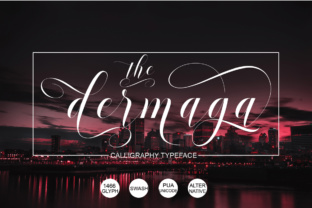
Dermaga: A Script Handwritten Font
There’s something magical about the moment you lay your hands on a new font and imagine how it will transform your creations. For me, that moment came when I first discovered Dermaga—a script handwritten font that feels like a personal touch on every project.
I was working on a set of candle labels for my small handmade shop when I stumbled upon Dermaga. The font had a soft, flowing style that felt both elegant and approachable. It wasn’t too ornate, nor too simple. It struck the perfect balance between artistic flair and readability, making it ideal for everything from product labels to digital printables.
Visual Personality and Creative Appeal
Dermaga has a warm, handcrafted feel that adds character to any design. Its curves are gentle, its lines are expressive, and its overall aesthetic is reminiscent of a handwritten note or a vintage sign. This makes it perfect for romantic themes, farmhouse decor, wedding stationery, and seasonal projects.
The font includes over 1400 glyphs, which means there’s a lot of flexibility in how it can be used. Whether I’m designing a greeting card, a printable wall art, or a boutique tag, Dermaga always brings a sense of authenticity and charm to the final product.
Practical Applications for Makers
One of the first things I tried with Dermaga was creating custom labels for my soy candles. I paired it with a clean sans serif font for the scent names and ingredient lists, allowing the script to shine as the main text. The result was a label that looked professional yet personal—perfect for my small business.
I also used Dermaga for a set of birthday invitations. The font added a playful yet refined touch, making the invitations feel more special than standard printed ones. I experimented with different sizes and spacing, finding that it worked best for short phrases and titles rather than long paragraphs.
For my printable wall art, I designed a series of seasonal quotes using Dermaga. The font’s fluidity made it easy to adjust for different layouts, and its natural look gave the prints a handmade feel that customers loved. I paired it with a simple serif font for the background text, creating a nice contrast that kept the design from feeling too busy.
Designing for Different Mediums
When working with cutting machines like Cricut or Silhouette, I found that Dermaga works well for small stickers and labels. The font’s details are clear enough to be cut without losing their visual appeal, and its curves don’t get too complicated for the machine to handle.
For printed cards and packaging, I recommend using a slightly larger size to ensure legibility. I also tested it on a tote bag design, where it added a subtle yet stylish touch to the text. It worked especially well for a “Handmade with Love” tag, giving the item a personal, artisanal feel.
Dermaga is also great for digital downloads. I created a set of printable planner pages using the font, and the results were beautiful. The font’s personality helped make the pages feel more engaging and creative, encouraging users to interact with the content in a more thoughtful way.
Font Pairing and Design Tips
When pairing Dermaga with other fonts, I’ve found that it works best with clean, modern typefaces. A simple sans serif or serif font can provide a nice counterbalance to the script’s flow, making the overall design more cohesive and readable.
If you’re using Dermaga for display purposes, such as in logos or headings, consider using it in combination with a bold or decorative font. This can add depth and visual interest while keeping the design from becoming too overwhelming.
Before using Dermaga in commercial projects, I always check the font’s licensing information. It’s important to ensure that the font is suitable for your specific use case, whether you’re selling physical products, printables, or digital downloads.
Realistic Use Cases
One of my favorite uses of Dermaga has been in farmhouse signs. I designed a set of holiday tags with the font, and they turned out beautifully. The font’s softness complemented the rustic theme perfectly, adding a touch of elegance without being too formal.
I also used it for a wedding welcome board, where it added a personal, heartfelt touch. The font’s versatility allowed me to create different versions for each event, ensuring that the design remained fresh and unique.
For my printable templates, I included a few examples of how Dermaga can be used in different contexts. This helps customers understand the font’s potential and encourages them to experiment with their own designs.
Overall, Dermaga has become an essential part of my design toolkit. Its charm, flexibility, and ease of use make it a valuable asset for any maker or designer looking to add a personal touch to their work.